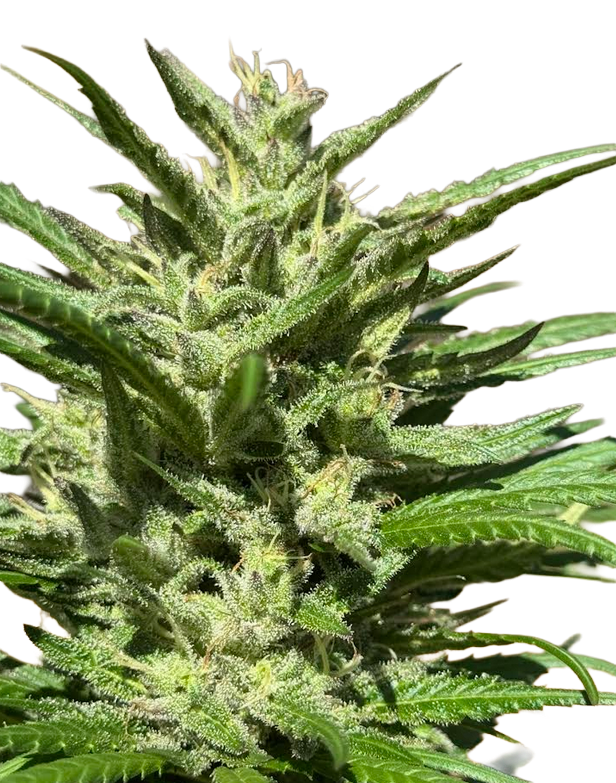
The Fertile Crescent is where agriculture began. Wheat, barley, lentils, flax — the crops that made settled civilization possible were first cultivated in the arc of land stretching from the Nile Delta through the Levant and into Mesopotamia. Cannabis was among them. The Syrian landrace is a direct descendant of those early cultivated populations, and it carries that history in its genetics in ways that are measurable, observable, and irreplaceable.
Syria sits at a geographic crossroads. To the west, the Mediterranean. To the east, the Syrian Desert and the ancient trade routes that connected Persia to the Levantine coast. To the north, the Anatolian highlands. This intersection of climates, cultures, and commerce shaped Syrian cannabis into something unlike the varieties that developed in isolation further east or south — more variable, more resinous, and adapted to conditions that swing between extremes.
A Crop Shaped by Climate
The Syrian interior is not an easy place to grow. Summers are long and punishing, with temperatures routinely exceeding 100°F in the lowlands and a dry season that can last six months or more. Winters bring cold, sometimes frost, and rainfall that arrives in concentrated bursts before the dry season reasserts itself. Plants that survived and reproduced in this environment did so by developing particular traits: deep root systems, resinous exteriors that reduce moisture loss and deter insects, and a flowering schedule timed precisely to the end of the long summer.
This is what local adaptation looks like from the inside. The Syrian landrace didn't develop these characteristics because a breeder selected for them. It developed them because the plants that didn't have them failed to reproduce. Over hundreds of generations, what remained was a population finely tuned to a very specific set of conditions. That tuning is the value.
The Silk Road Connection
Syrian cannabis didn't stay in Syria. The Silk Road carried goods, people, and plants across thousands of miles for centuries, and the Levantine coast was one of its western termini. Cannabis resins and seeds moved through these trade networks, connecting Syrian populations to those of Persia, Central Asia, and eventually India. The genetic fingerprints of this exchange are visible in modern analysis — Syrian landrace shares markers with populations as far east as Afghanistan, while retaining its own distinct character.
This connectivity also meant that Syrian cannabis was exposed to more genetic diversity than isolated mountain populations in places like Nepal or the Hindu Kush. Rather than developing extreme uniformity within a narrow adaptive range, Syrian cannabis retained a broader genetic base — one that made it resilient across a wider range of conditions. Collectors who have grown Syrian material in North America often note its adaptability: it handles heat, handles variation in water availability, and produces with a consistency that surprises people expecting a more finicky landrace.
What the Genetics Look Like
Syrian landrace plants are typically medium to tall, with a branching structure that opens up more than the tight, columnar form of Afghan-type plants. The leaves are narrow and long — classic sativa expression — and the internodal spacing reflects the long-season growing conditions it was bred for. Flowering initiates later than most commercial varieties and progresses slowly, with a full expression of aromatic complexity that shorter-season selections rarely achieve.
The resin production is pronounced for a landrace, particularly given that Syrian populations were traditionally grown for hashish production as well as seed. The volatile compounds that develop during the long flower — including terpenes that don't fully express in abbreviated cycles — are part of what makes Syrian genetics interesting to researchers and collectors alike. You're not just looking at a historical curiosity. You're looking at a biochemical profile that took centuries to develop.
Why It's Worth Preserving
Conflict has devastated Syrian agriculture in ways that go far beyond the visible destruction. The informal seed networks that maintained traditional varieties — the farmers who saved seed from their best plants each season, the local knowledge about which populations did well in which conditions — have been severely disrupted. Genetic material that existed only in cultivation, in specific regions, in the memory of specific farming communities, has been lost or is at serious risk.
The Syrian landrace genetics currently in preservation represent material that was collected before the worst of the disruption, held by collectors who understood what they had. Not all of what's called Syrian in the seed trade actually is — the same naming problem that affects every popular landrace applies here — but genuine, documented Syrian material exists, and maintaining its viability is worth doing carefully.
We work with Syrian material that traces to collections made in the Levant region before the current conflict. It is not a large gene pool. That's precisely why it matters. Every generation maintained with care is another generation of options for the future — for breeders, for researchers, for anyone who thinks the genetic record of ten thousand years of agriculture is worth keeping intact.
Now available